In brief
- The Digweeds were tenants, not owners, of Steventon manor house and farm, which belonged to the Knight family.
- In Jane Austen's time the tenancy was held by Harry Digweed; his younger brother James (1774–1862) appears in her letters.
- Accounts of the tenancy's length differ, from more than a century to more than 150 years.
- William Francis Digweed appears in the 1839 tithe apportionment, and John Digweed farmed Manor Farm in 1871.
Contents
Tenants of the manor
For the Austens at the rectory, the nearest household of any size was the Digweeds' at the manor house. The Digweeds did not own Steventon. They rented the old manor house and its large farm from the Knights, the family who owned most of the parish, and they went on renting it for several generations. In the Austens' time the family was represented by a group of brothers, and their names turn up again and again in Jane Austen's letters, usually in passing and often with a joke attached.
This page sets out what can be said about them with some confidence, and marks where the published accounts disagree. A good deal of what circulates online about the Digweeds is repeated from one or two Victorian notes.
At a glance
| Item | Detail |
|---|---|
| Status | Tenant farmers of Steventon manor house and farm, under the Knight family |
| Best known members | Harry Digweed (the brother who held the tenancy in Jane Austen's time); James Digweed (1774–1862) |
| In the 1839 tithe apportionment | William Francis Digweed, among the occupiers |
| Later | John Digweed, tenant of Manor Farm in 1871 |
| Connections | Neighbours and friends of the Austens at Steventon rectory |
| Traces today | The tithe records; census returns; mentions in Jane Austen's letters; the family pew tradition at St Nicholas' |
The manor house they rented
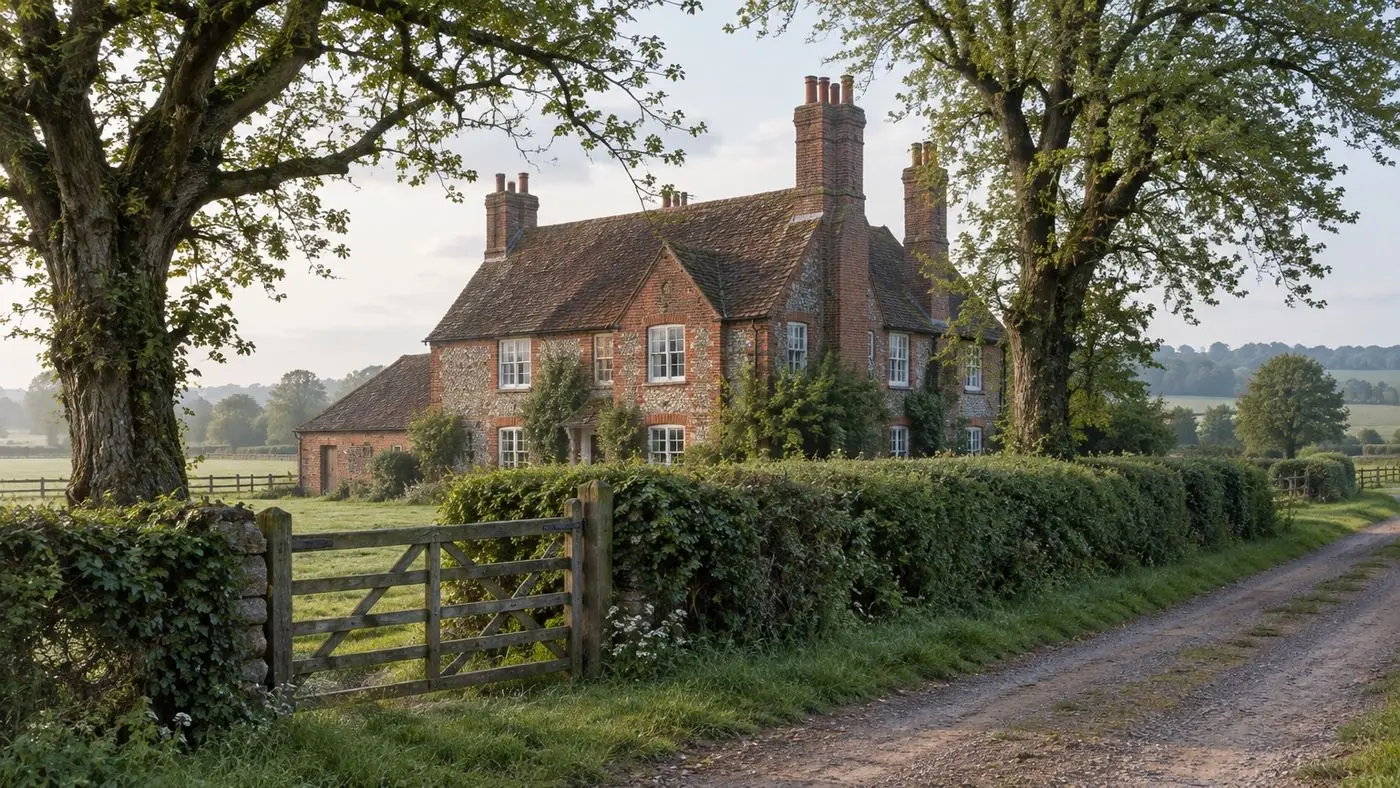
When the Digweeds lived there, Steventon manor house was an old building, described by Lord Brabourne in his 1884 edition of the letters as "a fine old Elizabethan manor-house" with a large farm attached. The house was close to St Nicholas' Church, at the top of the lane from the rectory. What happened to the house afterwards is covered on our Steventon manor page.
The owners were absent. The Knights lived at Godmersham in Kent, and after 1794 the owner was Jane Austen's brother Edward (see Edward Austen Knight). In practice the Digweeds were the leading resident family in the village apart from the rector's.
How long did the tenancy last?
The sources do not agree, and we cannot settle it.
- Brabourne, writing in 1884, says the family had occupied the manor house for more than 150 years.
- A later account says they were tenant farmers of the Steventon estate for more than a hundred years, until 1877, when the estate was sold.
- The Victoria County History shows a Digweed still farming the manor farm in 1871, which fits the second account at the end.
Brabourne's figure would push the start back into the early eighteenth century, roughly the time the Knights acquired the manor. That is possible, but we have not seen the leases. A run of Steventon estate papers survives among the Knight family archives, and anyone wishing to fix the dates would need to start there.
The Digweeds in Jane Austen's letters
Jane Austen mentions the Digweeds often, as one would expect of near neighbours. Most references are brief: who has called, who has been ill, who has gone to a ball. A few stand out.
James Digweed and the elms
In November 1800 a storm brought down trees around Steventon rectory, and Jane described the damage to Cassandra, who was away in Kent. In a letter dated 20 November 1800 she reported that James Digweed had left Hampshire, and teased her sister that he must be in love with her, since he supposed that "the two elms fell from their grief at your absence". It is a joke, and should be read as one. Nothing more is known of any attachment between James Digweed and Cassandra Austen.
Harry and James
James Digweed (1774–1862) was the younger brother of Harry Digweed, who held the tenancy in the 1790s. Both appear in the letters by their first names, as people who needed no explanation to Cassandra. James later lived away from Steventon; one source places the brothers at different times at Worting and Dummer, both nearby parishes. We have not checked that against the registers.
Sheep and the rector
Brabourne also passes on a story from John Bond, George Austen's farm man, that Mr Austen used to join Mr Digweed in buying twenty or thirty sheep at a time, and that Bond once remarked they had had the best of the luck with Mr Digweed that day. It is second-hand and comes to us through Brabourne, but it is the only glimpse we have of the two households working together as farmers.
At St Nicholas'
Local accounts say the Digweeds, as tenants of the manor, used the manor pew in Steventon church in the Austens' day. That is what one would expect, since the pew went with the house rather than the owner. We have not traced any Digweed memorials inside the church, and would be glad to hear from anyone who has.
The later Digweeds
The family were still prominent in the nineteenth century.
- The 1839 tithe apportionment for Steventon lists William Francis Digweed among the occupiers of land owned by Edward Knight Esq. Our Steventon tithe map pages give the plot details.
- The 1861 census records W. F. Digweed as an employer in the parish.
- By 1871, according to the Victoria County History, John Digweed, tenant of Manor Farm, dominated the economy of the village. One summary of the VCH figures has him farming about 1,380 acres and employing 38 people.
The estate itself changed hands twice in this period: the Knights sold it to the second Duke of Wellington in January 1855, and his family sold it in 1877. If the Digweed tenancy did end in 1877, the change of owner is the likely reason, but we have no document that says so.
Researching the family
The Digweed name is not a common one, which makes the registers easier to search. The best printed starting point is Deirdre Le Faye's Jane Austen's Steventon (2007), which traces the manor house and its occupants. For the letters, use Le Faye's edition of Jane Austen's Letters, whose index and biographical notes identify each Digweed mentioned; Brabourne's 1884 notes are useful but sometimes wrong. Census returns from 1841, the Steventon and Dummer registers, and the tithe documents will take you further.
Frequently asked questions
Did the Digweeds own Steventon Manor?
No. They rented the manor house and its farm from the Knight family, who owned most of the parish. After 1794 their landlord was Jane Austen's brother Edward.
Which Digweeds did Jane Austen know?
Chiefly the brothers Harry Digweed, who held the tenancy, and James Digweed (1774–1862), with others of the family appearing in her letters more briefly.
What is the story about James Digweed and the elms?
In a letter of 20 November 1800 Jane teased Cassandra that James Digweed must be in love with her, because he thought two elms blown down in a storm had fallen from grief at her absence.
How long were the Digweeds at Steventon?
Sources disagree. Brabourne (1884) says more than 150 years; another account says more than a hundred years, ending in 1877 when the estate was sold.
Where can I find out more?
Deirdre Le Faye's Jane Austen's Steventon (2007), her edition of Jane Austen's letters, the 1839 tithe apportionment and the census returns from 1841.
More in People
- The Bramstons of Oakley Hall and Deane
- Edward Austen Knight (1767–1852)
- Rev George Austen (1731–1805), rector of Steventon and Deane
- Rev James Austen (1765–1819)
Written for the restored archive by the society's volunteers. Corrections and additions are welcome via our contacts page.