Articles · Visiting
A Visitor's Guide to Jane Austen's Countryside: Steventon, Ashe and Deane
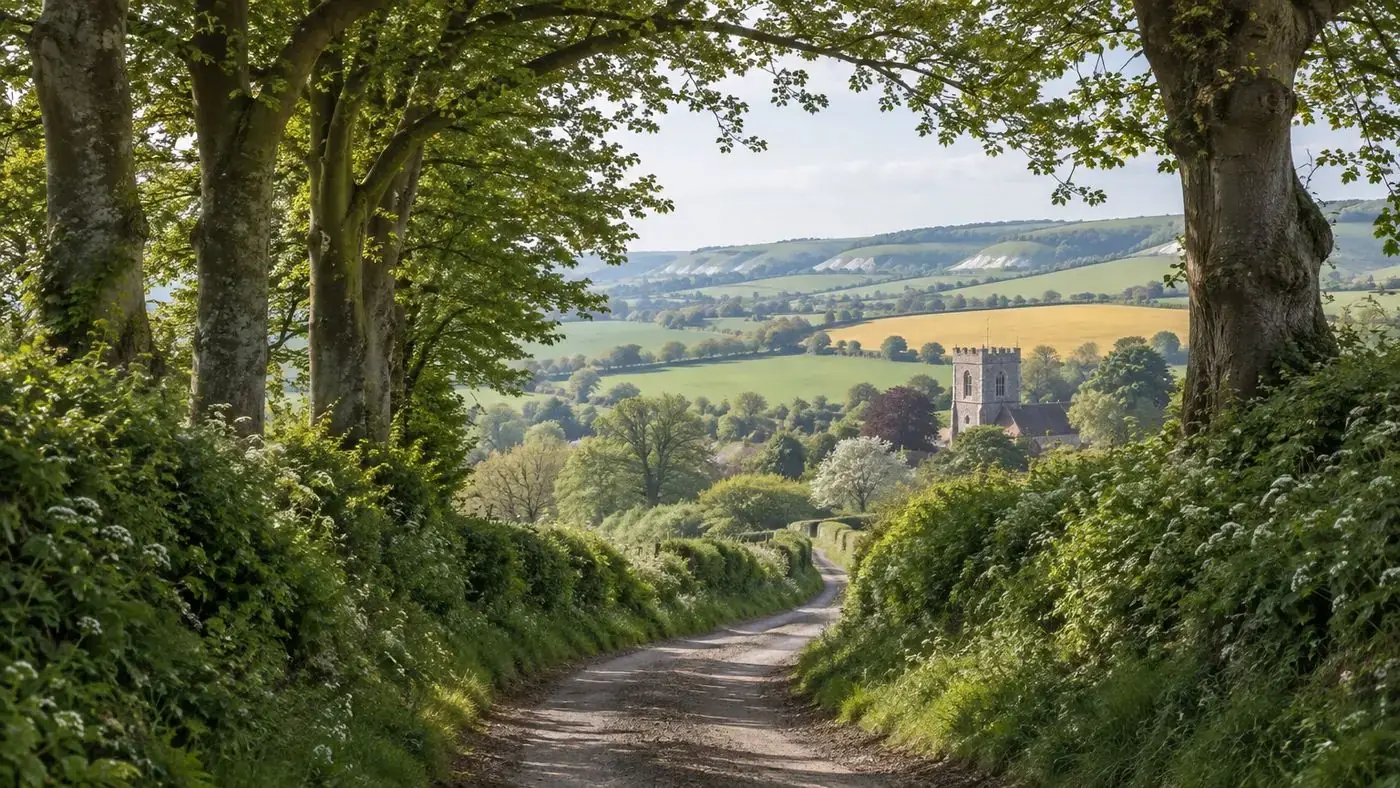
In brief
- Jane Austen was born at Steventon rectory in December 1775 and lived there until the family left for Bath in 1801.
- The rectory was pulled down in the 1820s. St Nicholas' church, Steventon, is the one Austen building still standing.
- Ashe was where the Lefroys lived, among them Jane's friend Madam Anne Lefroy; Deane was George Austen's first parish home.
- These are small working villages with no visitor centre, few facilities, narrow lanes and a lot of private land.
- Chawton and Winchester cover her later life and are better left for another day.
Contents
Most people who come looking for Jane Austen in Hampshire go to Chawton, where she wrote and revised the novels, and to Winchester, where she died and is buried. Her first twenty-five years, though, were spent a few miles south-west of Basingstoke, in the chalk parishes of Steventon, Ashe and Deane. She was born here, learned to dance at the local assemblies, and wrote the first versions of what became Pride and Prejudice, Sense and Sensibility and Northanger Abbey.
We are the volunteers who look after the archive of the North Waltham, Steventon, Ashe and Deane History Society. This guide covers what you can actually see today, what has gone, and how to visit without making a nuisance of yourself to the people who live here. Each village has its own page if you want more: Steventon, Ashe and Deane.
The Austens in north Hampshire, 1764–1801
The Reverend George Austen arrived in the 1760s as rector of Steventon. He also held the next-door living of Deane, which a relative had bought for him. When he married Cassandra Leigh in 1764 the Steventon rectory was not yet fit for a family, so the couple began married life in the parsonage at Deane. Most accounts put their move to Steventon at about 1768, although some sources give a later year.
Jane was born at Steventon rectory on 16 December 1775, the seventh of eight children. It was a full house. George Austen farmed some glebe land and took in boys as pupils to make ends meet, and the family put on plays in the barn. James, the eldest brother, later became curate and then succeeded his father as rector of Steventon. There is more on the parish clergy on our Steventon rectors page.
George Austen decided to retire in 1800, and early in 1801 the family moved to Bath. Jane is said to have been upset at the news. The well-known story that she fainted when she heard it is family tradition, however, and not something her own letters record (only some of them survive).
Friends and neighbours
The Austens mixed with the gentry and clergy families of the nearby parishes. At Ashe rectory lived the Reverend George Lefroy and his wife Anne, known as Madam Lefroy, a gifted and kindly woman who encouraged Jane's reading and writing. Jane met Madam Lefroy's nephew Tom Lefroy, a young Irishman, at Ashe over Christmas 1795–96, and their short flirtation turns up in her surviving letters. Madam Lefroy was killed by a fall from her horse in December 1804, and Jane afterwards wrote a poem in her memory.
What to see in Steventon
St Nicholas' church
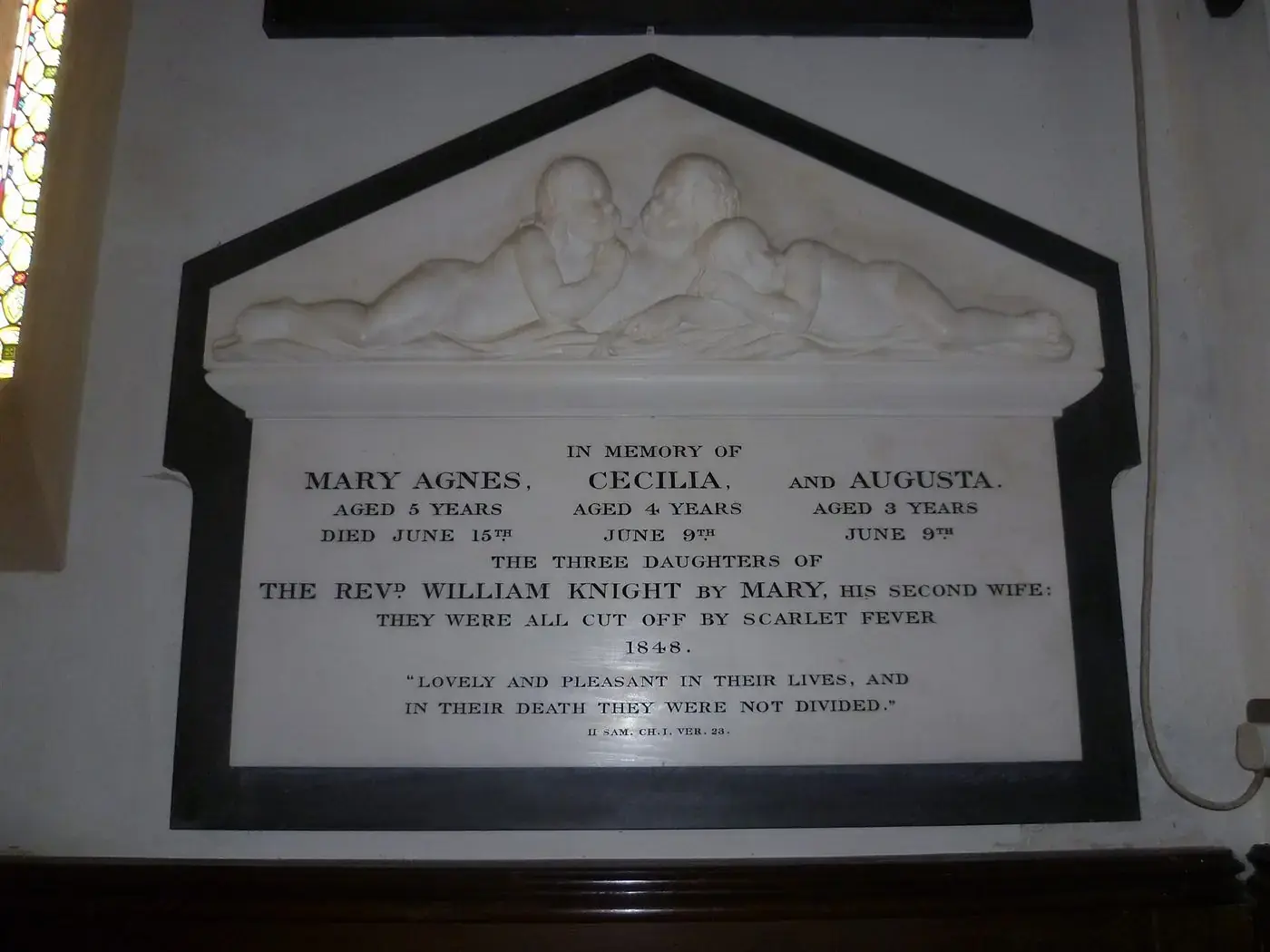
St Nicholas' is the only building in the village that Jane Austen would certainly know. It is a small church, mostly medieval and usually dated to the late twelfth or early thirteenth century, with later changes, Victorian work among them. Her father preached here and her brother James followed him. Inside are memorials to members of the family, including James Austen and his wives, and a later tablet to Jane herself. James is buried in the churchyard.
Near the church is the old yew, generally said to be many centuries old, which the Austens would have known. There is a local story that the church key used to be kept in a hollow in the tree. It is a nice story, but we know of nothing to prove it. Our Steventon church page has more on the building's history.
The site of the rectory
The rectory where Jane was born has gone. It was demolished in the 1820s and a new one built on higher ground on the other side of the valley. The old house stood beside the lane below the church, in what is a field today. Visitors tend to look for the old well or pump and a lime tree said to have been planted by James Austen, both often mentioned as marking where the house was. There is no plaque or board. The field is private, but you can see it from the lane.
The lane up from the rectory site to the church, which the family would have walked on Sundays, is about as near as you can get to following Jane's own footsteps. It is not far, but parts have no pavement, so watch for traffic.
Steventon Manor
The manor house stood next to the church and has a long history of its own, quite apart from the Austens. Our Steventon Manor page tells it, and there are old photographs of the village in the Steventon images collection.
What to see in Ashe
Ashe is a small parish near Overton, on the upper reaches of the River Test. The church of Holy Trinity and St Andrew was rebuilt in the late 1870s on the site of the older church the Lefroys and Austens knew, so most of what you see is Victorian. For Austen visitors the interest is in the Lefroys, who were rectors here, and in the rectory nearby, where Jane visited and danced. The old rectory is now a private house; if you look at it, do so from the public road.
Ashe Park, another gentry house in the parish, comes up in Jane's letters as part of local society. It is private as well. Our Ashe page has more on the parish and its families.
What to see in Deane
Deane was where George and Cassandra Austen first set up home, and James Austen later lived at Deane parsonage for a while before moving to Steventon. The parsonage they knew was replaced in the nineteenth century.
All Saints' church at Deane was rebuilt in about 1818 to 1820, paid for by the patron, Wither Bramston of Oakley Hall, so it is later than the Austens' time. It is a listed building and an interesting early piece of Gothic Revival. Deane House, the main house of the parish, was part of the Austens' circle and held local gatherings, but it is private.
Deane was also on the old road west out of Basingstoke, with the Deane Gate Inn beside it, so these quiet parishes were never far from the coaching traffic on the turnpike. See our Deane page for more.
Austen places at a glance
| Place | Austen connection | What you can see today |
|---|---|---|
| St Nicholas' church, Steventon | George Austen and later James Austen served as rector; the family worshipped here | Medieval church, Austen family memorials, James Austen's grave, ancient yew |
| Steventon rectory site | Jane's birthplace and home, 1775 to 1801 | A field beside the lane; the house was demolished in the 1820s; private land |
| Ashe church and rectory | Home of the Lefroys; where Jane met Tom Lefroy in 1795–96 | Church rebuilt in the late 1870s; former rectory is a private house |
| Deane parsonage | George and Cassandra Austen's first home, from 1764 | Replaced in the nineteenth century; nothing of the Austens' house survives |
| All Saints' church, Deane | Parish held by George Austen | Church rebuilt c.1818–20, after the Austens' time |
| Chawton | Jane's home from 1809 until 1817 | Jane Austen's House museum and Chawton House |
| Winchester Cathedral | Jane died in Winchester in 1817 and is buried in the cathedral | Her gravestone and later memorials in the nave |
Visiting respectfully: practical tips
People live and farm here; it is not a heritage attraction. A bit of planning helps both you and them.
- Check whether the church will be open. Arrangements differ and do change: some churches stay open in daylight, others are kept locked. Look at the benefice or A Church Near You listings before setting off, and keep away during services unless you mean to join in.
- Keep off private land. The rectory site, Ashe rectory, Ashe Park and Deane House are all private, so stay on public roads and paths.
- Park with care. The lanes are narrow and farm machinery uses them. Don't block field gates, drives or passing places. There is very little parking near the churches.
- Don't expect facilities. None of the villages has a visitor centre, café or public toilet, so plan to eat and drink in Basingstoke, Overton or somewhere else.
- Mind the roads on foot. Many lanes have no pavement. Wear sensible shoes, and something high-visibility if you are walking on the road in poor light.
- Leave the churchyard as you found it. The graves belong to local families; please don't take rubbings or stand on memorials.
- Put something in the box if you can. Small country churches depend on visitors' gifts to keep going.
A suggested half-day itinerary
- Start at St Nicholas' church, Steventon, and give yourself time for the memorials and the churchyard.
- Walk down the lane and look at the field where the rectory was.
- Drive to Deane and see All Saints' church from the road, or inside if it is open.
- Go on to Ashe for Holy Trinity and St Andrew's church and the Lefroys' parish.
- Stop in Overton or Basingstoke for something to eat.
The villages are close together by car, but the roads are minor ones. Take a proper up-to-date map rather than trusting satnav on its own, and ask locally before trying any of it on foot.
Nearby: Chawton and Winchester
For the rest of Jane's life, go to Chawton, in east Hampshire near Alton. In 1809 her brother Edward Austen Knight gave his mother and sisters a cottage there, which is now Jane Austen's House museum, and the Knight family's Chawton House is close by. Jane spent her last weeks in Winchester and died there in July 1817; she is buried in the cathedral. Both have regular opening hours, facilities and displays, none of which you will find around Steventon, so the two trips sit well together.
What survives, and what does not
We should be straight with you. The house Jane grew up in has gone, so has Deane parsonage, and the churches at Ashe and Deane were both rebuilt after her day. What is left is Steventon church, the lanes and field boundaries, and downland, hedges and woods that have changed less than most places. Plenty of visitors find that quiet countryside is what they came for. The old photographs and research by former Society members in our archive pages may help with what can no longer be seen.
Frequently asked questions
Can I visit the house where Jane Austen was born?
No. Steventon rectory was pulled down in the 1820s. Where it stood is now a private field beside the lane below St Nicholas' church, which you can see from the lane.
Is St Nicholas' church in Steventon open to visitors?
It is often open in daylight, but that varies and can change. Check the local benefice or A Church Near You listing before you travel, and avoid service times unless you are coming to the service.
Is Jane Austen buried at Steventon?
No. She died in Winchester in 1817 and is buried in Winchester Cathedral. Her brother James is buried in Steventon churchyard, and there are Austen family memorials inside the church.
Where did Jane Austen meet Tom Lefroy?
At Ashe, over Christmas 1795 to 1796, while he was staying with his Lefroy relatives at Ashe rectory. He is mentioned in her surviving letters.
Are there toilets, cafés or parking at Steventon?
There are no public facilities in Steventon, Ashe or Deane, and very little parking on the narrow lanes. Eat in a nearby town and park with care.
How long should I allow for a visit?
Half a day by car is enough for Steventon church, the rectory site and the churches at Deane and Ashe. Keep Chawton and Winchester for another day.
Further reading on this site
- The Lefroys of Ashe: Madam Lefroy, Tom Lefroy and the Austens — The Lefroy family of Ashe rectory: Anne Lefroy, Jane Austen's admired older friend; Tom Lefroy's famous winter visit; and the marriage that later joined the Lefroys and the Austens.
- Jane Austen's Grave in Winchester Cathedral
- How to Trace Your Ancestors from North Waltham, Steventon, Ashe and Deane
- How to Read a Tithe Map and Apportionment: A Steventon Example
- Turnpike Roads and Coaching Inns Around Basingstoke
This guide was written for the restored archive by the society's volunteers. If you can add to it or spot a mistake, please get in touch through our contacts page.