Articles · Village history
The Poor Law in Our Villages: From Parish Overseers to Basingstoke Workhouse
In brief
- Until 1834 each parish relieved its own poor through overseers and a poor rate, and settlement law decided which parish was responsible.
- Basingstoke Poor Law Union was formed on 18 May 1835 and included Steventon, North Waltham and Deane; Ashe went to the Whitchurch Union.
- The Basingstoke workhouse was built in 1835 to 1836 on the north side of Basing Road, later becoming Basing Road Hospital.
- Most paupers received outdoor relief at home rather than entering the workhouse.
- Guardians' minutes survive at Hampshire Record Office; central correspondence is in MH 12 at The National Archives.
Contents
Before the welfare state, a family in Steventon or North Waltham that could not keep itself turned to the parish. Who paid, who decided and where a pauper could be sent were all set by the Poor Law, and the rules changed sharply in the 1830s. This article follows the system from the parish vestry to the union workhouse on the Basing Road, and sets out what records survive for anyone trying to trace a poor ancestor or a village's experience of poverty.
It draws in part on the talk Barbara Large gave to the society on Basingstoke Workhouse in 2012, listed in the 2012 to 2013 programme. We have no transcript of that talk in the archive, so the detail below comes from published sources, which are named where it matters.
The old poor law in the parish
From the Elizabethan statutes of 1597 and 1601 until 1834, each parish looked after its own poor. The work fell to the overseers of the poor, usually two substantial householders appointed each year by the justices. They set a poor rate on the occupiers of land and houses, collected it, and paid it out. In a small downland parish the overseers were often farmers, and they were relieving men who worked, or had worked, on their own land.
Relief under the old system was flexible and personal. Overseers' accounts from Hampshire parishes typically record weekly payments to widows and the elderly, rent paid for a cottage, shoes or a coat for a child, a doctor's bill, the cost of a funeral, and occasional sums to a man out of work in a hard winter. Some parishes kept a poorhouse, a cottage or two where paupers could be lodged; others simply paid cash. Whether Steventon, North Waltham, Deane or Ashe kept a poorhouse is something we have not been able to confirm, and it would be worth checking the vestry minutes and overseers' accounts listed in the Hampshire Record Office catalogue.
Settlement and removal
Because each parish paid for its own poor, it mattered greatly which parish a person belonged to. The Settlement Act of 1662 and later statutes gave a legal "settlement" by birth, by marriage (for a woman, her husband's parish), by serving a year under a hiring contract, by apprenticeship, or by renting property above a set value. A newcomer who looked likely to need relief could be examined before a justice and, if their settlement lay elsewhere, removed back to it.
These proceedings produced some of the most useful papers a family historian can find:
- Settlement examinations, in which a person told the justice, under oath, where they were born, whom they had worked for and where they had lived.
- Removal orders, sending a person or family from one parish to another.
- Settlement certificates, in which a home parish agreed to take a person back if they became chargeable elsewhere.
- Bastardy papers, naming the putative father of an illegitimate child so the parish could recover maintenance from him.
Survival is patchy. Some parishes have bundles of these papers; others have nothing. Where they exist they are usually kept with the parish records at Winchester. The terms used in them are explained in our glossary of old parish records.
Pressure on the rates
By the early nineteenth century the cost of poor relief had risen steeply across southern England. Low farm wages were often topped up from the rates according to the price of bread and the size of a family, a practice usually linked with the Berkshire magistrates' meeting at Speenhamland in 1795. Critics argued that this kept wages down and encouraged dependence. In Hampshire the Swing disturbances of late 1830, when farm labourers broke threshing machines and demanded higher pay, added to the sense that the system had failed. Within four years Parliament had replaced it.
The Poor Law Amendment Act of 1834
The Poor Law Amendment Act of 1834 grouped parishes into Poor Law Unions, each run by an elected Board of Guardians and each expected to build a workhouse. A central Poor Law Commission in London issued orders and regulations and approved plans. The intention was that relief for the able-bodied would be given only inside the workhouse, on terms deliberately worse than the life of the poorest independent labourer. The parish overseer did not disappear; overseers still collected the poor rate for the union. But decisions about relief passed to the Guardians.
| Feature | Old poor law (to 1834) | New poor law (from 1835 locally) |
|---|---|---|
| Unit | The single parish | A union of parishes |
| Who decided relief | Overseers and vestry, with the justices | Elected Board of Guardians and its relieving officer |
| Usual form of relief | Cash, rent, goods, a parish poorhouse | The union workhouse in principle; outdoor relief in practice for many |
| Supervision | Local justices | Poor Law Commission (1834), Poor Law Board (1847), Local Government Board (1871) |
| Main local records | Overseers' accounts, vestry minutes, settlement papers | Guardians' minutes, union registers, central correspondence |
Which union were our villages in?
The Basingstoke Poor Law Union was formed on 18 May 1835. According to the parish list published by Peter Higginbotham on the workhouses.org.uk site, it began with 37 parishes, 36 in Hampshire and Beech Hill in Berkshire, represented by 41 Guardians. Steventon, North Waltham and Deane (spelt Dean in the list) were all among them, along with neighbours such as Oakley, Popham, Dummer, Worting and Wootton St Lawrence.
Ashe was different. It was placed in the Whitchurch Union, formed in June 1835 with Overton, Whitchurch, St Mary Bourne, Hurstbourne Priors, Tufton and Freefolk Manor. A poor family in Ashe would therefore have dealt with Guardians meeting at Whitchurch, not Basingstoke, and would be found in a different set of records. The registration districts set up in 1837 followed the unions, which is why births, marriages and deaths in Ashe were registered in the Whitchurch district until the parish was abolished in 1932 and divided between Overton and Steventon.
This split catches people out. If you are researching an Ashe family, check which side of the boundary they lived on at the date in question before ordering records. Our village pages for Ashe and Deane give more on the parishes themselves.
Basingstoke Union Workhouse
The Basingstoke workhouse was built in 1835 to 1836 to the east of the town, on the north side of the Basing Road. The architect was Sampson Kempthorne, whose model plans were widely used by the new unions, and the Poor Law Commissioners approved a sum of £7,500 for a building to hold about 400 inmates. Inside, men, women, boys and girls were separated, and the elderly were in principle kept apart from the able-bodied.
The building changed with the times. A new infirmary opened in 1900 on the north-west part of the site. When the Guardians were abolished under the Local Government Act of 1929, the workhouse passed to the county in 1930 as a Public Assistance Institution. From 1948 it became Basing Road Hospital under the new National Health Service, and the site was sold in 1983. A local reader may know the Basing Road site today; we would welcome photographs of the hospital years for the archive.
Life inside
Daily life was governed by printed rules: fixed hours, plain uniform dress, set dietaries, and work such as stone-breaking, oakum picking, or laundry and kitchen work for women. Children were taught in the workhouse school. For people from our villages the workhouse was some miles away, and admission often meant leaving cottage, garden and neighbours for good. The elderly and the sick made up a large share of inmates by the later nineteenth century, and the workhouse increasingly served as an infirmary for the poor.
Outdoor relief
The workhouse is the image everyone remembers, but most paupers never entered one. Outdoor relief, paid in cash or in kind to people living in their own homes, continued throughout the century, especially for widows, the elderly, the sick and families hit by sudden illness. Relieving officers visited applicants and reported to the Guardians, who decided each case. Nationally there were periods of pressure to cut outdoor relief, notably from the 1870s, and an Open University thesis on the Basingstoke Union between about 1870 and 1900 looks at how this worked locally. It is a good place to start for the later period.
Records that survive and where to find them
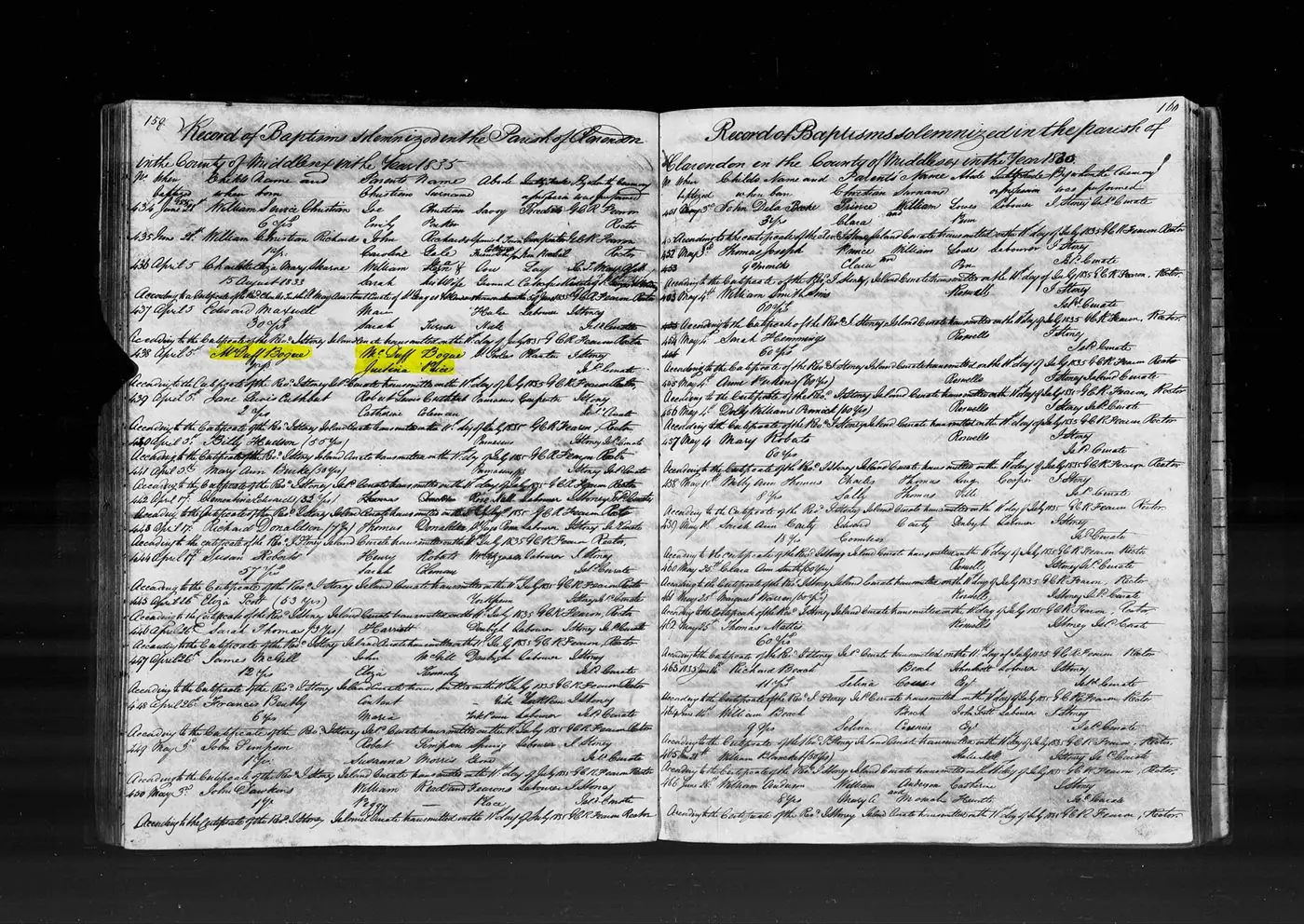
Hampshire Record Office in Winchester holds the main local collections. For the Basingstoke Union, the published guides note that relatively little survives beyond the Guardians' minute books, which run from 1835 to 1930, together with some committee minutes and a later ledger. Admission and discharge registers, which name individual inmates, do not appear to survive for Basingstoke in any quantity. The Whitchurch Union also has Guardians' minutes at Winchester.
- Guardians' minute books. Weekly business, including relief decisions, staff appointments, contracts for supplies and cases referred from the parishes. Individual names do appear, though not systematically.
- Parish records. Overseers' accounts, rate books, vestry minutes and settlement papers for each parish, mostly before 1835, catalogued with that parish's records.
- Central correspondence at The National Archives. Series MH 12 holds letters between each union and the central authority from 1834 to about 1900, arranged by county and union. It covers complaints, inquiries, appointments, building plans and individual cases. Some unions have been digitised; search Discovery for "Basingstoke" or "Whitchurch" within MH 12 to see what is available online.
- Census returns. Workhouse inmates were enumerated from 1841, usually with initials only in 1841 and full names later. The census can also show a pauper living at home on parish relief.
- Newspapers. Reports of Guardians' meetings, inquests and scandals appeared regularly in the Hampshire press.
For tracing an individual, combine these with parish registers. A burial entry noting "from the Union" or a baptism of a child born in the workhouse can open up a story that the minute books alone would never show. Our wider guide to tracing ancestors in north Hampshire covers the registers and other sources.
What we do not yet know
Several local questions are still open. We have not found published figures for how many people from Steventon, North Waltham, Deane or Ashe were in the workhouse at any one time, or how much outdoor relief each parish drew. We do not know who served as Guardians for our parishes in particular years, though the minute books should say. If you have worked through any of these records, or have family papers that mention parish relief, please get in touch with the archive volunteers.
Frequently asked questions
Was Ashe in the Basingstoke Poor Law Union?
No. Ashe was in the Whitchurch Union, formed in June 1835. Steventon, North Waltham and Deane were in the Basingstoke Union.
Where was Basingstoke workhouse?
East of the town on the north side of Basing Road. It was built in 1835 to 1836 and later became Basing Road Hospital; the site was sold in 1983.
Are there admission registers listing Basingstoke workhouse inmates?
Very few Basingstoke Union records survive apart from the Guardians' minute books. Census returns from 1841 onwards are often the best way to find a named inmate.
What is a settlement examination?
A sworn statement made before a justice by someone who might need relief, setting out where they were born, worked and lived, so the parish responsible for them could be identified.
What is MH 12?
A series at The National Archives holding correspondence between each Poor Law Union and the central authority, roughly 1834 to 1900. Search Discovery by union name to see what exists and whether it is online.
Did the overseers of the poor disappear after 1834?
No. Parishes still appointed overseers, who collected the poor rate, but decisions about relief passed to the union's Guardians and relieving officers.
Further reading on this site
- Pastimes of the Village Pub: Traditional Games in Rural Hampshire
- Victorian Village Schools in Rural Hampshire
- The Farming Year in a Chalk Downland Parish
This guide was written for the restored archive by the society's volunteers. If you can add to it or spot a mistake, please get in touch through our contacts page.