In brief
- Turnpike trusts were local bodies set up by Act of Parliament to mend roads and charge tolls to pay for it.
- The road west from Basingstoke through Oakley, Deane and Overton towards Andover was turnpiked in the mid-eighteenth century.
- Stagecoaches and mail coaches kept the roadside inns busy until the railway reached Basingstoke in 1839.
- Most trusts were wound up between the 1870s and 1890s, and their roads passed to highway authorities and then county councils.
- For research, start with milestones, old maps, the Acts and the trust records at Hampshire Archives.
Contents
Basingstoke has long been a junction. Roads out of London divide here for Salisbury and the West Country, Winchester and Southampton, Andover and Newbury. None of our four parishes was far from one of them: Deane is on the old road west of Basingstoke, and North Waltham is close to the main road towards Stockbridge and Salisbury. Below we explain what a turnpike road was, how coaching grew and then collapsed, and how you can look into the history of a local road for yourself.
What were turnpike trusts?
Before turnpikes, each parish looked after its own roads. Tudor legislation made every parish appoint a surveyor of highways, and parishioners owed a few days' unpaid work a year, or money instead. That was all very well for a village lane, but it did not work on busy through routes, where a small country parish was expected to keep up a road used mainly by outsiders.
The turnpike trust was the answer. Local landowners, merchants and gentlemen would petition Parliament for an Act letting them take over a length of road, borrow against future income, repair and improve it, and get their money back from tolls. The first such Act is usually dated to 1663, for part of the Great North Road. Trusts spread from the 1700s, fastest in the middle of the eighteenth century, until much of England's main road network had been turnpiked.
How tolls worked
Each Act laid down the tolls, usually on a sliding scale: so much for a coach or wagon depending on how many horses drew it, less for a horse and rider, and a set rate for every score of cattle, sheep or pigs driven along. Tollgates were put up at intervals, often with a little tollhouse for the keeper. (They were sometimes called turnpikes, after the spiked bar once used to close the road.) Some traffic usually went free, for example people on their way to church, mail coaches, and farm carts moving manure or produce inside the parish, but the details differed from one Act to the next.
Trusts often auctioned the right to collect the tolls each year, so the toll farmer who won the bid took both the risk and any profit. Nobody liked the gates, and plenty of people dodged them by going round on side lanes.
Milestones
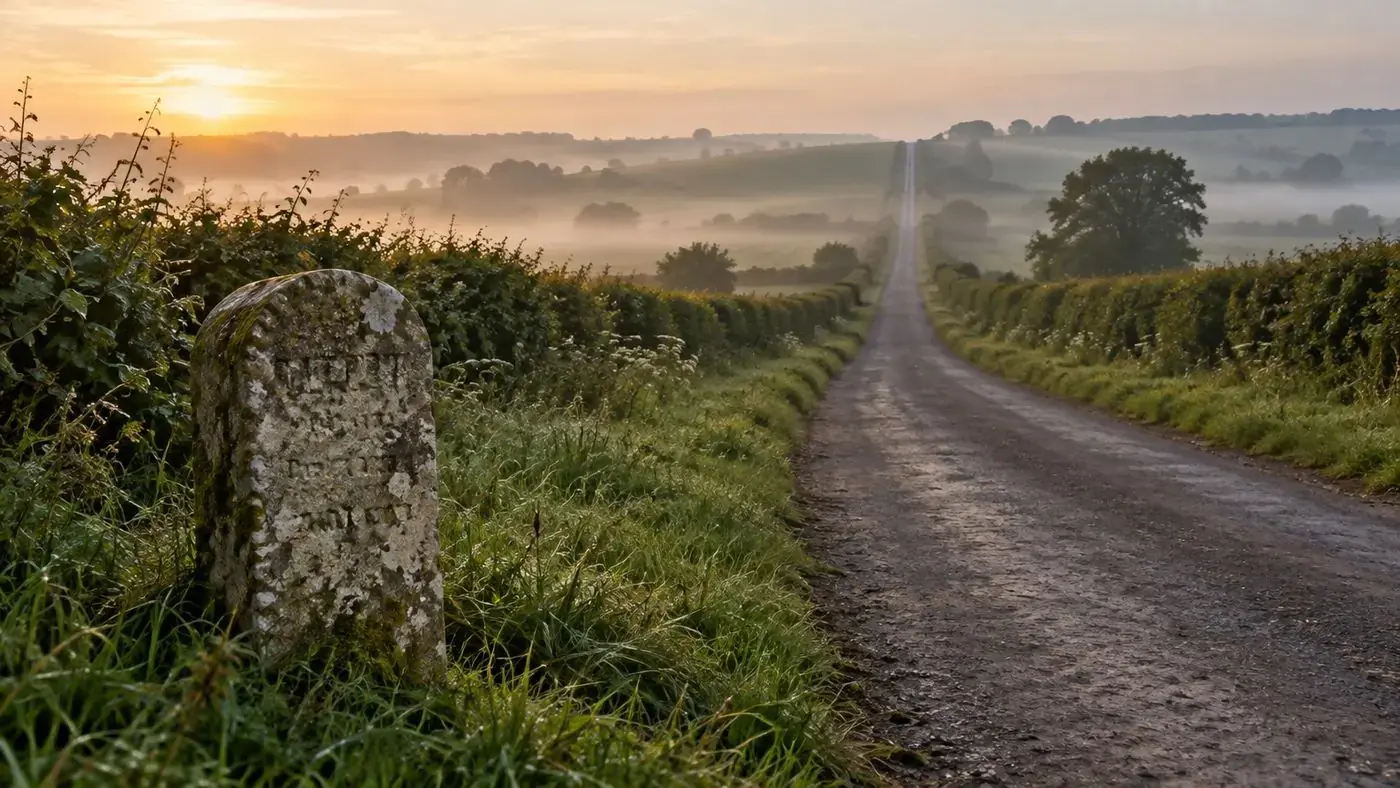
Later legislation obliged the trusts to mark distances on their roads, and milestones are among the commonest things they left behind. Many in Hampshire are now listed. One example is the listed milestone on the B3400 near Overton, which survives from the Andover and Basingstoke turnpike. Milestones get damaged by roadworks and verge-cutting, and sometimes stolen, so if you know of one nearby please make a note of where it is and what state it is in.
The road west of Basingstoke
The road from Basingstoke through Worting, Oakley, Deane and Overton to Whitchurch and Andover, roughly today's B3400, was a turnpike. Historic England's listing records suggest the Andover and Basingstoke turnpike opened in the 1750s. The other roads out of Basingstoke, towards Winchester and towards Stockbridge and Salisbury, were turnpiked too, though we have not yet pinned down the dates and trusts for each.
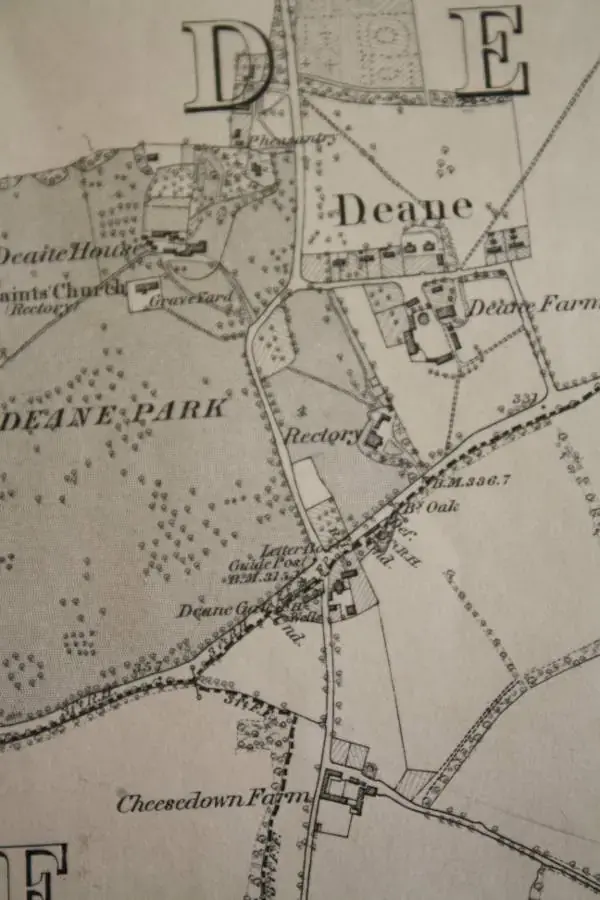
The turnpike was a mixed blessing for the villages. Better roads made it easier to get corn and livestock to market and to travel into Basingstoke, but carriers and farmers had the tolls to pay. Inns, smithies and wheelwrights along the road could do well from passing trade. One such inn was the Deane Gate Inn, which stood beside the road near Deane; there is an image of it in our archive. The name hints at a gate on the road, but we have found nothing in the documents to prove there was a tollgate on that spot, so it remains an open question for anyone researching locally. Our Deane page has more on the parish.
North Waltham and the main roads
North Waltham sits a little back from the main roads, between the routes towards Winchester and Stockbridge. How the village made use of them, whether through carriers, coaches or later motor traffic, would make a good piece of research. The North Waltham pages and the "Early Roads" material in our articles section are the places to begin.
The coaching era
With better roads came faster travel. From the later eighteenth century stagecoaches ran to timetables between London and the country towns, and from 1784 mail coaches carried the post at speed under John Palmer's scheme. Horses were changed at regular stages, so the coaching inns on the main roads kept big stables and employed ostlers, postboys and servants. Basingstoke's inns handled coaches bound for the West Country, Southampton and further.
It is easy to get sentimental about the coaching age. Travel was still dear, uncomfortable and, in winter, slow, and outside passengers paid less in return for sitting out in the weather. Most villagers would have known the carrier's cart far better than any stagecoach: it went into town on fixed days with goods and a few passengers.
The railway and the decline of the turnpikes
Within a few years the railway had changed everything. The London and Southampton Railway, which became the London and South Western Railway in 1839, opened from London to Basingstoke on 10 June 1839. The Basingstoke to Winchester section followed on 11 May 1840 and completed the route to Southampton; in the meantime coaches took passengers between the two railheads. Long-distance coaches on routes the railway now served soon disappeared, and so did much of the turnpikes' toll money.
Many trusts sank into debt. Parliament began winding them up in the 1860s, and Acts of the 1870s made many old turnpikes into "main roads" kept up by highway authorities. Once the Local Government Act 1888 had set up county councils, the main roads became their responsibility. The last English trusts were dissolved in the 1890s. There is railway material under "Our Trains" in our articles section.
Timeline of roads and travel around Basingstoke
| Date | Event |
|---|---|
| 1555 | Highways Act makes each parish responsible for its roads, with unpaid statute labour |
| 1663 | First turnpike Act, for part of the Great North Road |
| 1750s | Andover and Basingstoke turnpike opened, according to listing records |
| 1784 | First mail coaches run under John Palmer's scheme |
| Early 1800s | Height of the coaching age on main roads |
| 10 June 1839 | Railway opens from London to Basingstoke |
| 11 May 1840 | Basingstoke to Winchester section opens, completing the line to Southampton |
| 1860s to 1870s | Turnpike trusts begin to be wound up; legislation creates "main roads" |
| 1888 | County councils created and take on main roads |
| 1890s | Last English turnpike trusts dissolved |
How to research old roads
The evidence for an old road is spread between the ground itself and the record office, so you will need to use both. This is roughly how we would go about it.
- Walk the route. Look out for milestones, boundary stones, old tollhouses (often given away by a bay front with windows looking both ways along the road), inns and smithies. Take a grid reference and a photograph of each.
- Compare maps. Begin with the current Ordnance Survey and work back through the large-scale OS editions of the later nineteenth century, the first one-inch OS maps and the older county maps. Road strip maps such as John Ogilby's (1675) show the main routes before turnpiking. The Old Hampshire Mapped project puts many Hampshire maps online.
- Read the Acts. A turnpike Act names the road, the trustees and the tolls, and the renewal Acts show what changed. Many libraries and record offices have printed copies.
- Search for the trust's own records. Minute books, accounts, toll-letting papers and mortgage registers, where they survive, are often at Hampshire Archives in Winchester. Try the trust's name in the online catalogue.
- Look at quarter sessions records. The justices dealt with highway business, including diversions and closures, and plans of public undertakings were later deposited with the clerk of the peace. These are at Hampshire Archives as well.
- Check the parish records. Surveyors of highways' accounts, vestry minutes and tithe and enclosure maps cover the minor roads and lanes.
- Read newspapers and directories. The Hampshire Chronicle and other papers advertised toll auctions and coach services, and trade directories list carriers and inns.
Recording what you find
- Write down the exact location and the date you saw it.
- Photograph milestone inscriptions before they wear away any further.
- Note every archive reference you look at.
- Pass on what you find to your local society or record office so that it is kept.
Former members gathered a fair amount on local roads and railways, and much of it is in the articles section. If you can add anything, please get in touch through the contacts page.
Frequently asked questions
What was a turnpike trust?
A body of local trustees set up by Act of Parliament to take over a length of road and improve it. The trust borrowed money for the repairs and paid it back from tolls on the traffic.
Was the road through Deane a turnpike?
Yes. The road from Basingstoke through Oakley, Deane and Overton towards Whitchurch and Andover, more or less today's B3400, was part of the Andover and Basingstoke turnpike, which listing records date to the 1750s.
When did the railway reach Basingstoke?
On 10 June 1839, when the London and Southampton Railway (soon renamed the London and South Western Railway) opened from London. The line on to Winchester opened on 11 May 1840.
Why did turnpike trusts come to an end?
The railways took most of the long-distance traffic that had paid the tolls, and many trusts were left in debt. Parliament wound them up from the 1860s, and their roads went to highway authorities and, after 1888, to the county councils.
Where are turnpike trust records for Hampshire kept?
What survives is generally at Hampshire Archives in Winchester, along with quarter sessions and parish highway records. Search the online catalogue under the name of the trust or the road.
Did the Deane Gate Inn have a tollgate?
Possibly. The name suggests a gate on the road, but we have not found any document that proves there was a tollgate on that site, so the question is still open.
Further reading on this site
- How to Trace Your Ancestors from North Waltham, Steventon, Ashe and Deane
- How to Read a Tithe Map and Apportionment: A Steventon Example
- A Glossary of Words Found in Old Parish Records
This guide was written for the restored archive by the society's volunteers. If you can add to it or spot a mistake, please get in touch through our contacts page.