In brief
- The line from Basingstoke to Winchester through Steventon opened on 11 May 1840, the last section of the London to Southampton route.
- The company became the London and South Western Railway in June 1839 and is listed as owner and occupier in the 1839 Steventon tithe apportionment.
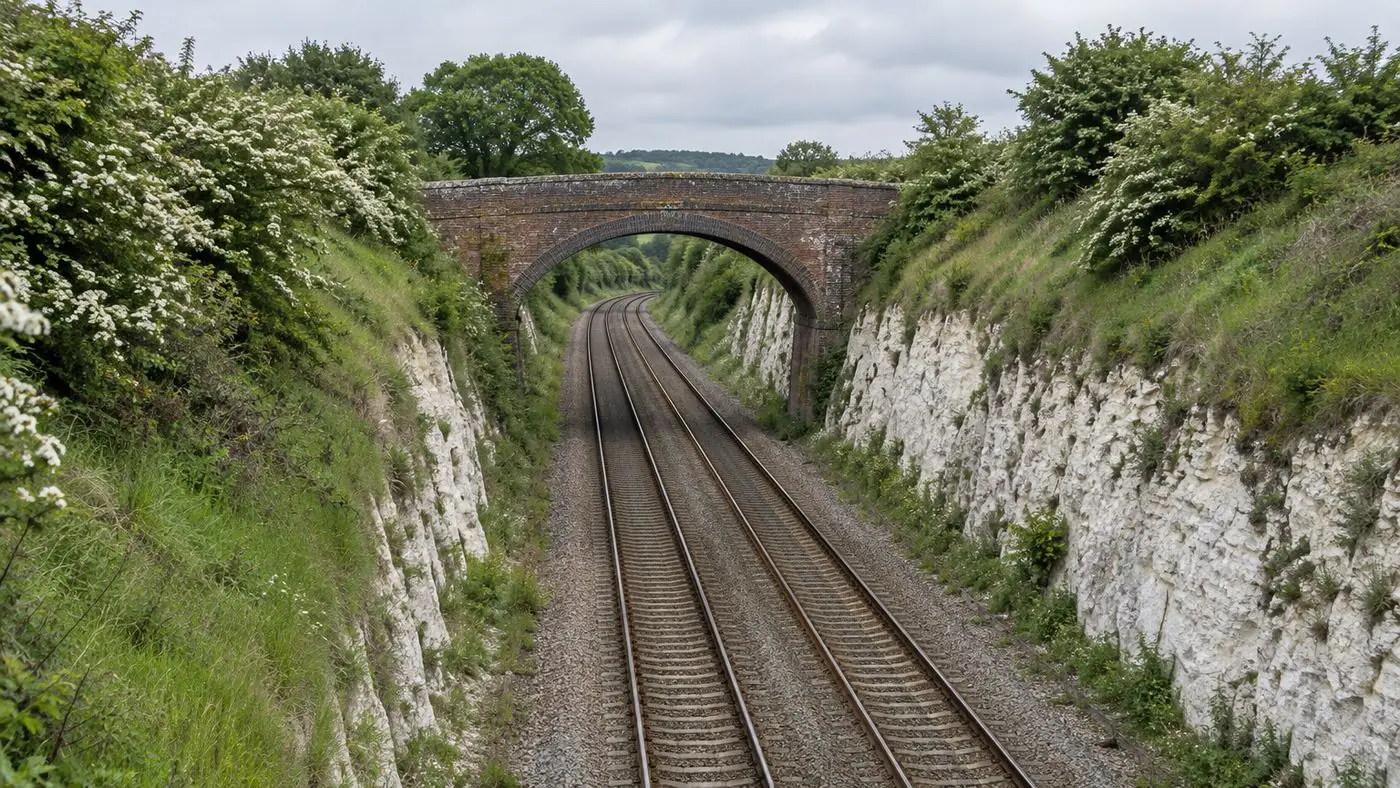
- The line climbs from Basingstoke to a summit near the Steventon Arch before running south to Micheldever.
- We have found no evidence that Steventon in Hampshire ever had a station; Basingstoke, Micheldever, Oakley and Overton served the area.
- Maps, census returns, LSWR staff records and newspapers are the main sources for local railway history.
Contents
Trains have run through Steventon parish since May 1840, yet the village has never had a station of its own. The main line from London to Southampton crosses the parish on its way from Basingstoke to Winchester, and for most of its history it has been something local people heard and saw rather than used at their own door. This article sets out what is known about the line's arrival, how it crossed the parish, and how to find out more.
The London and Southampton Railway
The London and Southampton Railway received its Act of Parliament on 25 July 1834. Its first engineer, Francis Giles, made slow progress with many small contractors and resigned at the start of 1837. Joseph Locke took over, and brought in Thomas Brassey as a contractor on the eastern sections. A second Act in 1837 authorised a long deviation west of Basingstoke, replacing a planned tunnel of more than a mile near Popham with a different alignment through cuttings and two short tunnels.
The line was opened in stages, as each section was finished:
| Date | Section opened |
|---|---|
| 21 May 1838 | Nine Elms (London) to Woking Common |
| 24 September 1838 | Woking Common to Shapley Heath (Winchfield) |
| 10 June 1839 | Shapley Heath to Basingstoke; Winchester to Northam Road, Southampton |
| 11 May 1840 | Basingstoke to Winchester, through Steventon parish; Northam Road to Southampton terminus |
In June 1839, as the line reached Basingstoke, the company changed its name to the London and South Western Railway, a sign that it already had ambitions beyond Southampton. The Basingstoke to Winchester section was the last to be completed, partly because it involved the heaviest earthworks across the chalk.
The route across Steventon
Leaving Basingstoke, the line climbs south-west past the point that later became Worting Junction, in Oakley parish, and then runs through Steventon before turning southwards across high downland towards Micheldever. The Old Hampshire Gazetteer, compiled from historic maps, describes the line rising from Basingstoke to a summit near the bridge it calls the Steventon Arch, then falling gently through Overton and Laverstoke parishes, where Litchfield Tunnel and the two short Popham tunnels lie.
The railway was already part of the landscape when the parish was surveyed for tithe. In the 1839 Steventon tithe apportionment the London and South Western Railway appears as owner and occupier of the land taken for the line, listed in the same way as a farmer or landowner. Our page on the Steventon tithe map explains how to read those entries. Comparing the railway strip on the tithe map with field boundaries on either side shows how the line cut across existing holdings.
We have not traced the exact line of the parish boundary against the railway, and the modern civil parish differs from the ancient one, not least because part of Ashe was added to Steventon in 1932. Anyone checking whether the line also touched North Waltham or Deane land should work from the tithe maps and the first edition Ordnance Survey, not from a modern road atlas.
Later changes nearby
Two later developments altered the railway landscape just to the east of the parish. In 1854 the line to Andover and Salisbury opened, branching off west of Basingstoke at what became Worting Junction. At the end of the nineteenth century the LSWR built the Battledown flyover, carrying one line over the other so that trains for Southampton and trains for Salisbury no longer crossed on the level. Both are in Oakley parish, but anyone living in Steventon would have seen the traffic increase.
Construction and the navvies
Railway building in the 1830s was done largely by hand. Gangs of navvies dug cuttings with picks and shovels, filled wagons, and tipped spoil to form embankments, with horses hauling the loads. Across the chalk between Basingstoke and Winchester the work was heavy, and the navvies would have lived in huts near the workings or lodged in cottages and farm buildings in the villages along the route.
We have not found any published account of the navvies at Steventon itself. The places to look are:
- parish registers for 1838 to 1840, for baptisms, marriages or burials of men described as labourers or "excavators" from outside the area;
- Hampshire newspapers of those years, which reported accidents, fights and court cases involving railway workers;
- quarter sessions and petty sessions records at Hampshire Record Office;
- the 1841 census, taken in June, a year after the line opened, which may still show railway labourers or platelayers living locally.
Railway Cottages and the men who kept the line
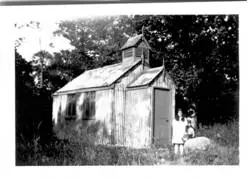
Once the line was open, the railway needed men to maintain it. Platelayers, gangers and signalmen looked after set lengths of track, and the company built cottages for some of them close to the line. The archive holds photographs of Railway Cottages at Steventon. We do not yet know when they were built or who first lived there; the building date might be narrowed down by comparing editions of the Ordnance Survey, and census returns from 1851 onward should name the occupants and their railway jobs.
If the cottages appear in the 1881 or 1891 census, the occupations listed will usually be specific: platelayer, ganger, signalman, labourer on the railway. Cross-checking those names against LSWR staff records can then fill in pay, promotion and length of service.
Effects on carriers and coaching
Before 1839, travel between London and the south-west of Hampshire ran along the turnpike roads, with stage coaches changing horses at Basingstoke inns. Within a few years of the railway opening, the long-distance coaches on the Southampton road had largely gone, since they could not compete on speed or price. Our article on turnpike roads and coaching inns around Basingstoke covers that earlier world.
Local carriers fared differently. A village carrier's cart, running on set days to Basingstoke market, was still needed to bring goods and passengers from places without a station, and in many Hampshire villages carriers continued well into the twentieth century. In effect the railway changed their work rather than ending it: carts now met trains at the nearest station. Trade directories such as Kelly's list carriers by village and are the best way to see this for Steventon and North Waltham.
Did Steventon ever have a station?
We have found no evidence that there was ever a station or halt at Steventon in Hampshire, and none is shown in the lists of LSWR stations we have checked. People in the parish used stations at some distance:
| Station | Opened | Notes |
|---|---|---|
| Basingstoke | 10 June 1839 | The main station for the district; still open. |
| Andover Road, later Micheldever | 11 May 1840 | Served Andover until that town had its own line; renamed Micheldever in 1856. Still open. |
| Oakley | 3 July 1854 | On the Salisbury line; closed 17 June 1963. |
| Overton | 3 July 1854 | On the Salisbury line; still open. |
A warning for researchers: there was a station called Steventon on the Great Western main line, but that was Steventon in Berkshire, now Oxfordshire, near Didcot. Search results, sale catalogues and even some archives mix the two up. Anything mentioning Brunel, the Great Western or Didcot is almost certainly about the other Steventon.
How to research railway history locally
The best results usually come from putting several sources side by side:
- Maps. The 1839 tithe map shows the railway land as first acquired. The first edition 25-inch and 6-inch Ordnance Survey maps of the 1870s show bridges, cottages, signal boxes and mileposts, and later editions show what changed. See our guide to old maps for local history.
- Staff records. LSWR staff registers survive in the RAIL series at The National Archives, and some are indexed online through the major family history websites. They are arranged by department and are easier to use if you already know a man's job and roughly where he worked.
- Census returns. From 1851 these give railway occupations by name and household, and show who lived in Railway Cottages.
- Newspapers. The Hampshire press reported the opening of the line, accidents, inquests, and later events such as snow blocking the cuttings.
- Company records. LSWR minute books and engineers' papers at The National Archives can include land purchases, bridge plans and complaints from landowners along the route.
- Photographs and memories. Many changes in the twentieth century, such as electrification of the line, the end of steam and changes to the cottages, are still within living or family memory.
If you have photographs of the line at Steventon, the Railway Cottages, or the bridges, the archive volunteers would be glad to hear from you.
Frequently asked questions
When did trains first run through Steventon?
The Basingstoke to Winchester section of the London and South Western Railway opened on 11 May 1840.
Was there ever a station at Steventon, Hampshire?
We have found no evidence of one. The nearest stations were Basingstoke, Micheldever (opened as Andover Road in 1840), and from 1854 Oakley and Overton.
Why do I find references to Steventon station and the Great Western Railway?
Those refer to Steventon in Berkshire, now Oxfordshire, on Brunel's line near Didcot. It is a different village.
Who lived in Railway Cottages at Steventon?
We do not yet know. Census returns from 1851 onwards should name the occupants and their railway jobs, and LSWR staff records can add more.
Where are LSWR staff records kept?
At The National Archives in the RAIL series. Some are indexed on the major family history websites.
Did the railway put local carriers out of business?
Not straight away. Long-distance coaches declined quickly, but village carriers continued to run to market towns and to meet trains for many years.
Further reading on this site
- Pastimes of the Village Pub: Traditional Games in Rural Hampshire
- Victorian Village Schools in Rural Hampshire
- The Farming Year in a Chalk Downland Parish
This guide was written for the restored archive by the society's volunteers. If you can add to it or spot a mistake, please get in touch through our contacts page.