In brief
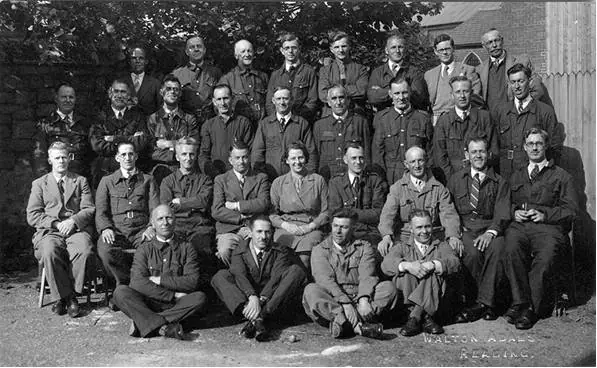
- The archive holds an ARP Team photograph from wartime Steventon; the people in it have not all been identified.
- Steventon Manor was requisitioned during the war and the mansion was demolished in 1969.
- We have found no published record of which towns sent evacuees to our villages; school log books are the likeliest source.
- The 1939 Register, taken on 29 September 1939, is the key listing of everyone living in the parishes at the start of the war.
- Oral history, parish magazines, newspapers and the National Farm Survey can fill in much of the local picture.
Contents
The Second World War reached North Waltham, Steventon, Ashe and Deane in the same ways it reached most of rural Hampshire: through blackout and air raid wardens, the Home Guard, children arriving from the towns, ration books and requisitioning. What it did not leave, so far as we have found, is a published local history of those years for our four parishes. This article sets out what is known in general, the few local facts the archive can vouch for, and where the rest is likely to be found. We have deliberately not filled the gaps with guesswork.
What the archive holds
The society's collection includes a photograph captioned "ARP Team" from Steventon during the war, which can be seen with other material on the Articles page. We do not have a full list of the people in it. If you can name anyone, please tell the archive volunteers, and say how you know, so the identification can be recorded properly.
The archive also notes that Steventon Manor was requisitioned. The Hampshire Gardens Trust's account of the house says the house and grounds were taken over for civil defence during the war, and that the mansion was demolished in 1969, with the stable block kept and later converted into a house. Another published account mentions a school, Hilsea College, using the manor around the start of the war before moving to Oakley Hall. We have not been able to reconcile these accounts or date each use exactly; the requisition files described below are the place to settle it.
Air Raid Precautions and the Home Guard
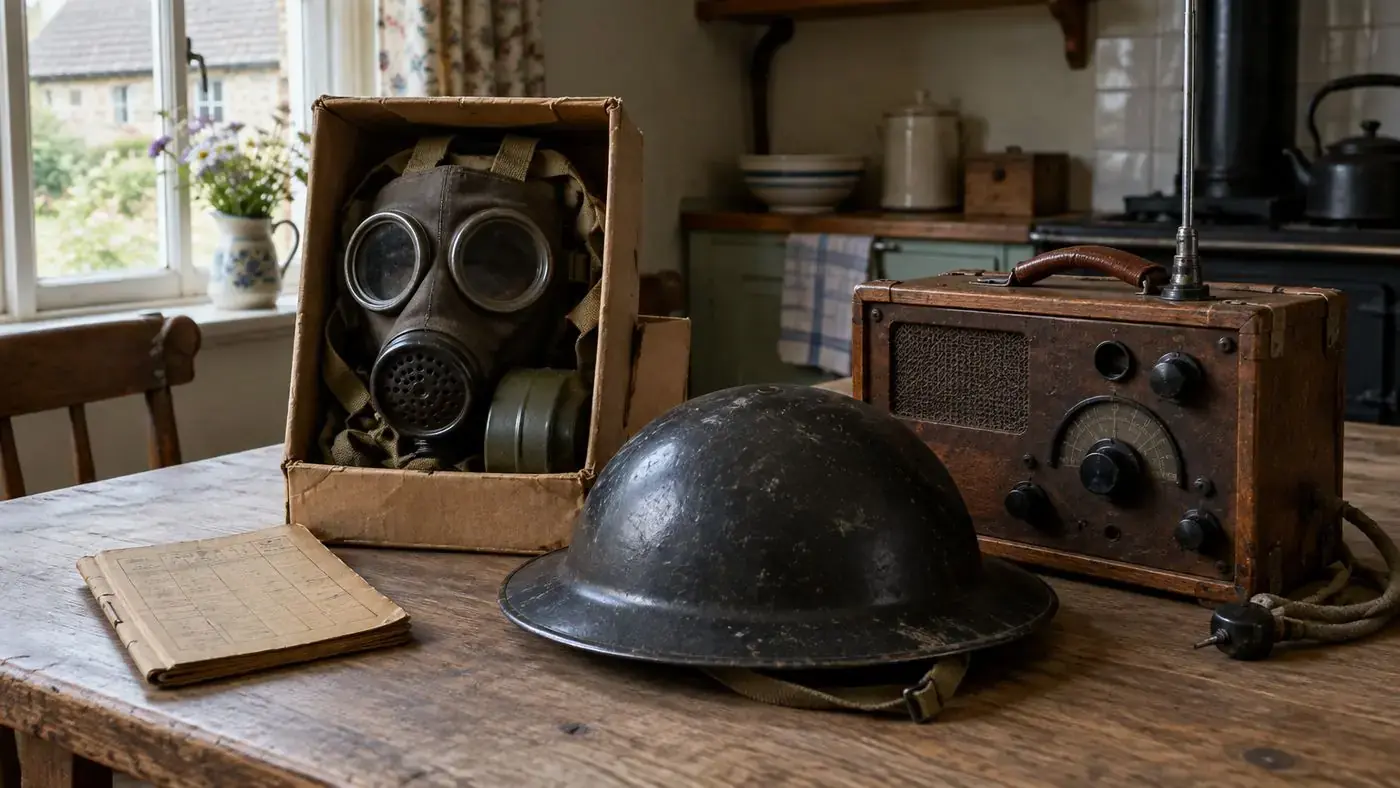
The Air Raid Precautions Act of 1937 required local authorities to organise civil defence, and by the outbreak of war in September 1939 even small villages had volunteer wardens. Their tasks included enforcing the blackout, reporting incidents, helping with gas mask distribution, and knowing who lived in each house. Rural wardens often doubled as fire watchers and first aiders.
The Local Defence Volunteers were formed in May 1940, as the German advance through France made invasion seem possible, and were renamed the Home Guard in July 1940. Village platoons were made up of men too old, too young or in reserved occupations, including many farm workers. They guarded roads, bridges and railway lines, manned observation posts, and trained in the evenings and at weekends. The Home Guard was stood down in December 1944.
| Organisation | Formed | Typical village role | Where records may be |
|---|---|---|---|
| Air Raid Precautions (later Civil Defence) | Under the 1937 Act; expanded 1938 to 1939 | Wardens, blackout, incident reports, first aid | Rural district council records at Hampshire Record Office; parish council minutes |
| Local Defence Volunteers / Home Guard | May 1940; renamed July 1940 | Guarding roads, bridges and the railway; observation | Service records via the Ministry of Defence; unit material at TNA (WO series); family papers |
| Women's Land Army | Re-formed 1939 | Farm work in place of men called up | Index cards at The National Archives (MAF 421) |
| Women's Voluntary Services | 1938 | Evacuee reception, salvage, canteens | Royal Voluntary Service archive |
The railway through Steventon would have been a natural point for Home Guard patrols, as main lines were across the country, but we have found no record that confirms this locally.
Evacuees
The official evacuation of schoolchildren, mothers with young children and others from designated towns began on 1 September 1939, two days before war was declared. Rural districts were classed as reception areas, and billeting officers placed children with households that had room. Many returned home during the quiet months of the "phoney war" and further waves followed the bombing of 1940 and 1941, and again during the flying bomb attacks of 1944.
We do not know which towns sent children to our villages, how many came, or where they were taught. In other Hampshire villages, evacuated schools sometimes shared the village school building in shifts, and the head teacher's log book is often the clearest record. Our article on village schools in Hampshire explains what log books are and why they are worth reading. Former evacuees and their families are another source: many wrote down or recorded their memories later in life.
Rationing, Dig for Victory and the land
Food rationing began on 8 January 1940 with bacon, ham, butter and sugar, and was extended over the following years to meat, tea, cheese, preserves and much else. Everyone registered with particular shops, which mattered in villages where there might be only one shop or a delivery round from Basingstoke. Clothes rationing followed in 1941.
The Dig for Victory campaign urged people to turn gardens and spare ground into vegetable plots. In farming parishes like ours the larger effect came from the county War Agricultural Executive Committees, which directed farmers to plough up grassland and could take over land they judged badly farmed. The 1941 to 1943 National Farm Survey, held at The National Archives in MAF 32 with maps in MAF 73, records each holding over five acres, its owner and occupier, its condition and what it grew. For a downland parish it is one of the most detailed wartime sources there is.
Things that families in many villages remembered, and which are worth asking about locally:
- pig clubs and rabbit keeping to supplement the meat ration;
- salvage collections of paper, metal and bones;
- school children picking rose hips or helping with the harvest;
- iron railings removed for scrap;
- Land Girls lodging on farms or in hostels.
Airfields and the military in north Hampshire
North Hampshire was busy with service activity throughout the war. A few verified points give the setting:
- Odiham, east of Basingstoke, was officially opened as an RAF station in 1937 and was in use throughout the war.
- Worthy Down, north of Winchester, passed to the Royal Navy in 1939 and became the Fleet Air Arm station HMS Kestrel.
- Micheldever had a decoy airfield, a dummy site lit at night to draw bombers away from Worthy Down, recorded from at least July 1941.
- Park Prewett in Basingstoke housed, at Rooksdown House, a plastic surgery unit opened in 1940 under Sir Harold Gillies, which treated service personnel and civilian casualties.
The airfield at Popham, which many people now pass on the A303, is not a wartime site. It was established in the 1970s. In the months before D-Day in June 1944, troops and vehicles were present across much of southern England, and convoys on the roads around Basingstoke would have been familiar, but we have no local record of particular units stationed in our parishes.
The 1939 Register
On 29 September 1939 every civilian in England and Wales was recorded in the National Register, which was used to issue identity cards and later ration books. It lists each household with full names, exact dates of birth, marital status and occupation. Because no census was taken in 1941 and the 1931 returns were destroyed, the 1939 Register is the only full listing of the population between 1921 and 1951. It is available on Ancestry and Findmypast; entries for people who may still be living are closed. Our guide to census records shows how to use it alongside earlier returns.
For a village study, the Register can show who was living in each house just after the outbreak of war, including evacuees who had already arrived, and the occupations of men not yet called up.
How to research the war years locally
- School log books and admission registers, which record evacuees arriving and leaving, air raid drills, closures and absences for harvest work.
- Parish magazines and church records, for appeals, memorial services, and news of men serving away.
- Newspapers. Wartime censorship limited place names, so reports of incidents may say only "a south of England village". Local appointments, court cases and fund-raising are reported more fully.
- Requisition files. The National Archives' guide to land and property requisitioned for war explains which departments' files to search for a house such as Steventon Manor.
- Parish and rural district council minutes, for ARP arrangements, billeting and salvage.
- Oral history. The youngest people with memories of the war are now in their eighties and older. Recording them, with permission and a note of date and speaker, is the most urgent task of all.
If you hold letters, photographs, ration books, identity cards or memories from any of the four villages, the archive would like to hear from you. Even a short note of who appears in a photograph, and when it was taken, is worth keeping.
Frequently asked questions
Were there evacuees in North Waltham or Steventon?
Rural Hampshire districts received evacuees, but we have not yet found a record of how many came to our villages or from where. The village school log books are the best place to check.
What happened to Steventon Manor in the war?
The house and grounds were requisitioned. The Hampshire Gardens Trust says they were used for civil defence; the mansion was demolished in 1969.
Was Popham airfield used in the Second World War?
No. Popham airfield was established in the 1970s. Wartime airfields nearby included Odiham and Worthy Down, with a decoy site at Micheldever.
How do I search the 1939 Register?
It is available on Ancestry and Findmypast. Search by name or address; records for people who may still be alive are closed.
Can I find Home Guard service records?
Home Guard service records are held by the Ministry of Defence and can be requested by next of kin. Unit war diaries and some papers are at The National Archives.
Can I help identify people in the ARP Team photograph?
Yes, please. Contact the archive volunteers with names and how you know them, so the identification can be recorded with its source.
Further reading on this site
- Pastimes of the Village Pub: Traditional Games in Rural Hampshire
- Victorian Village Schools in Rural Hampshire
- The Farming Year in a Chalk Downland Parish
This guide was written for the restored archive by the society's volunteers. If you can add to it or spot a mistake, please get in touch through our contacts page.